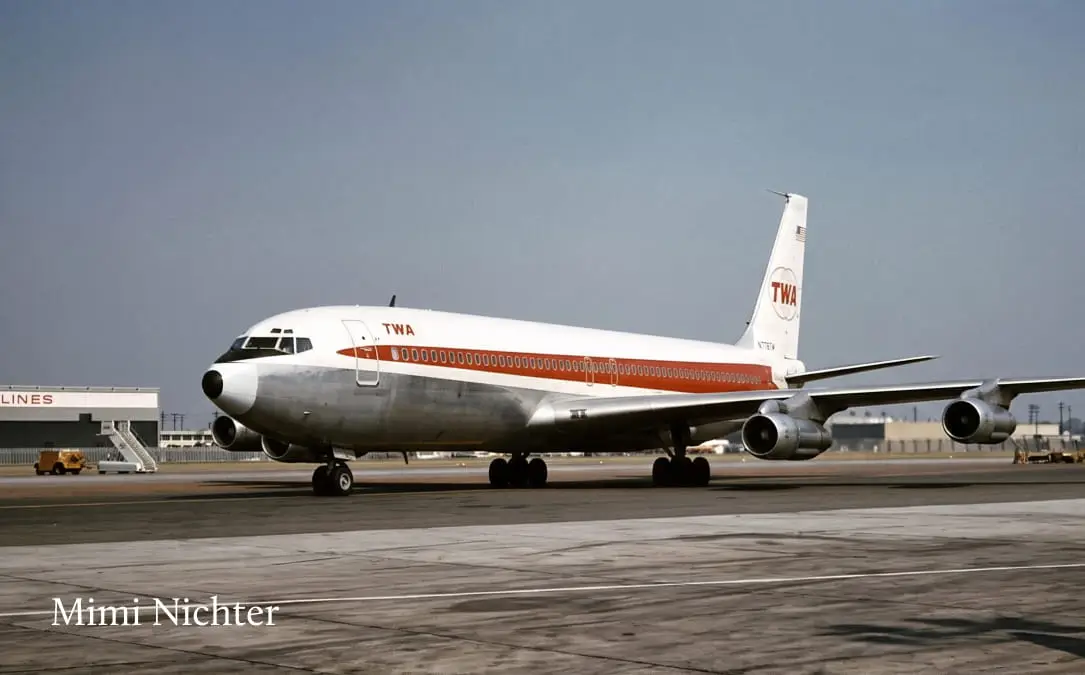
On September 6, 1970, militants hijacked three airliners and tried to take a fourth. The 1970 airplane hijacking wave peaked from September 6 to 9, when PFLP militants targeted five planes bound for New York and London. Three jets landed at Dawson’s Field in Jordan, and 310 people were held hostage. The crisis led to armed guards on U.S. flights, new airport screening efforts, and the 1970 Hague Convention.
Below, you’ll find the years in order, the story of those days, and what changed afterward.
Why were planes being hijacked in 1970?
Hijacking did not start in 1970. In the early 1960s, a wave of Americans forced commercial flights to Cuba. By 1970, the motives had widened.
Motives in 1970 varied. In March, an East German couple tried to flee to the West. Arthur Barkley wanted money: on June 4 he forced a TWA flight to Washington, D.C., and demanded $1 million. The PFLP wanted Palestinian prisoners freed.
The law lagged behind. The 1963 Tokyo Convention covered the return of hijacked aircraft, passengers, and crew. It did not require any country to prosecute or extradite the hijackers. The Hague Convention was written to close that gap.
A timeline of the 1970 airplane hijackings
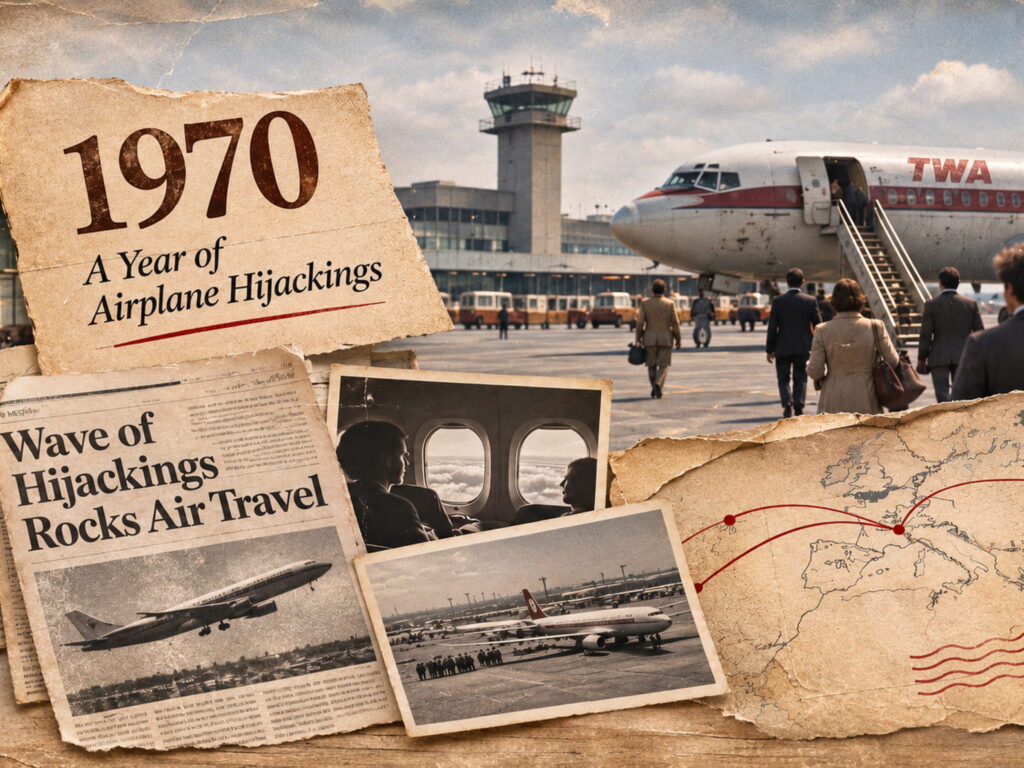
Six events frame the year.
| Date | Event | Outcome |
|---|---|---|
| March 10 | An East German couple tries to hijack an Interflug (East German airline) plane at Berlin-Schönefeld. | Failed; both died. |
| March 17 | Eastern Air Lines Shuttle Flight 1320, Boston | Reported as the first U.S. air piracy death |
| June 4 | Arthur Barkley forces a TWA flight to Washington, D.C. | Demanded $1 million; first reported U.S. extortion hijacking |
| Aug. 31 | Three passengers hijack a plane and demand to go to Albania. | Refused entry; landed in Dubrovnik, where they were arrested |
| Sept. 6–9 | PFLP hijackings | Four planes seized, one foiled |
| Dec. 16 | Hague Convention signed | In force Oct. 14, 1971 |
What happened on September 6, 1970?
On Sunday, September 6, members of the Popular Front for the Liberation of Palestine (PFLP) targeted four flights bound for New York. A fifth, bound for London, followed on September 9.
| Flight | Aircraft | What happened |
|---|---|---|
| TWA 741 (from Frankfurt) | Boeing 707 | Forced to land at Dawson’s Field |
| Swissair 100 (from Zürich) | Douglas DC-8 | Forced to land at Dawson’s Field |
| El Al 219 (from Amsterdam) | Boeing 707 | Hijack foiled; hijacker Patrick Argüello killed; Leila Khaled captured |
| Pan Am 93 | Boeing 747 | Taken by two hijackers kept off the El Al flight, flown to Beirut, then Cairo |
| BOAC 775 (from Bahrain, Sept. 9) | Vickers VC10 | Taken to Dawson’s Field to pressure Britain to free Khaled |
Dawson’s Field was a remote desert airstrip near Zarqa, Jordan.
Most of the 310 hostages were moved to Amman and freed on September 11. The PFLP separated out flight crews and Jewish passengers and kept 56 Jewish hostages. On September 12, the PFLP blew up the empty planes.
Jordan’s King Hussein declared martial law on September 16. His forces moved into Palestinian-controlled areas from September 17 to 27, a period known as Black September. A September 30 deal freed the remaining hostages in exchange for Khaled and three PFLP members held in a Swiss prison.
What was it like to be a hostage on the plane?
Nichter was 20 years old on September 6, 1970. Her flight was hijacked and forced down in the Jordanian desert. The flight was TWA 741.
Dates and flight numbers explain the event. They do not explain what a passenger saw.
How did the hijackings change aviation security?
On September 11, President Nixon announced a seven-part program.
| Date | Step | Actor |
|---|---|---|
| By Sept. 11 | The Security Council calls on all parties to release passengers and crews. | UN |
| Sept. 11 | Armed, specially trained government personnel to ride U.S. airliners | U.S. |
| Sept. 11 | Electronic surveillance extended at gateway airports; metal detectors and X-ray devices reviewed | U.S. |
| Sept. 11 | The emergency meeting of the ICAO Council was requested. | U.S. |
| By Sept. 21 | Benjamin O. Davis Jr. appointed Director of Civil Aviation Security | U.S. |
| Dec. 16 | Hague Convention signed | International conference (77 states took part) |
Nixon also called on countries to suspend airline service to any state that refused to punish or extradite hijackers.
The Hague Convention set the legal rule: countries that join must prosecute or extradite hijackers. It was signed on December 16, 1970, and took effect on October 14, 1971. It had 185 parties as of 2013.
Was 1970 really the turning point?
Partly. 1970 started the response. It did not finish.
The armed guard program, the new security director, and the Hague treaty all date to 1970. The treaty took until October 1971 to take effect. Mandatory passenger screening came later.
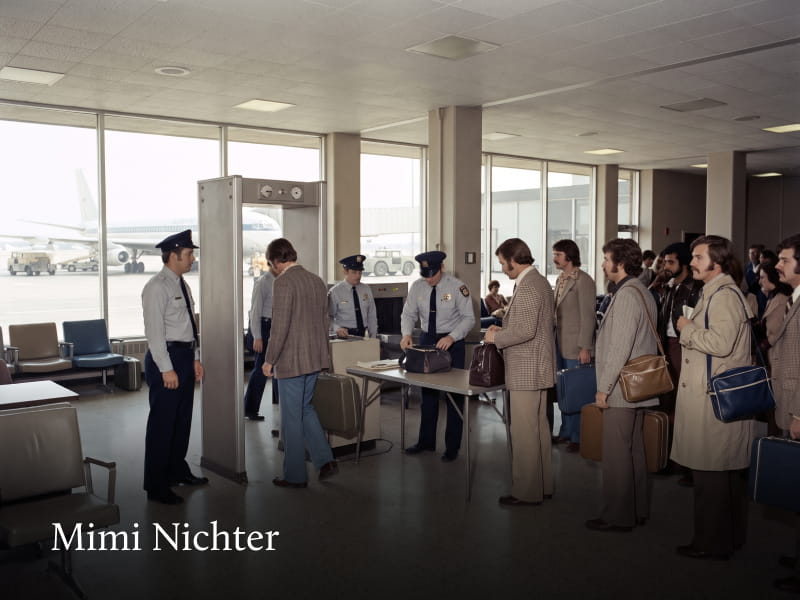
The long aftermath for hostages
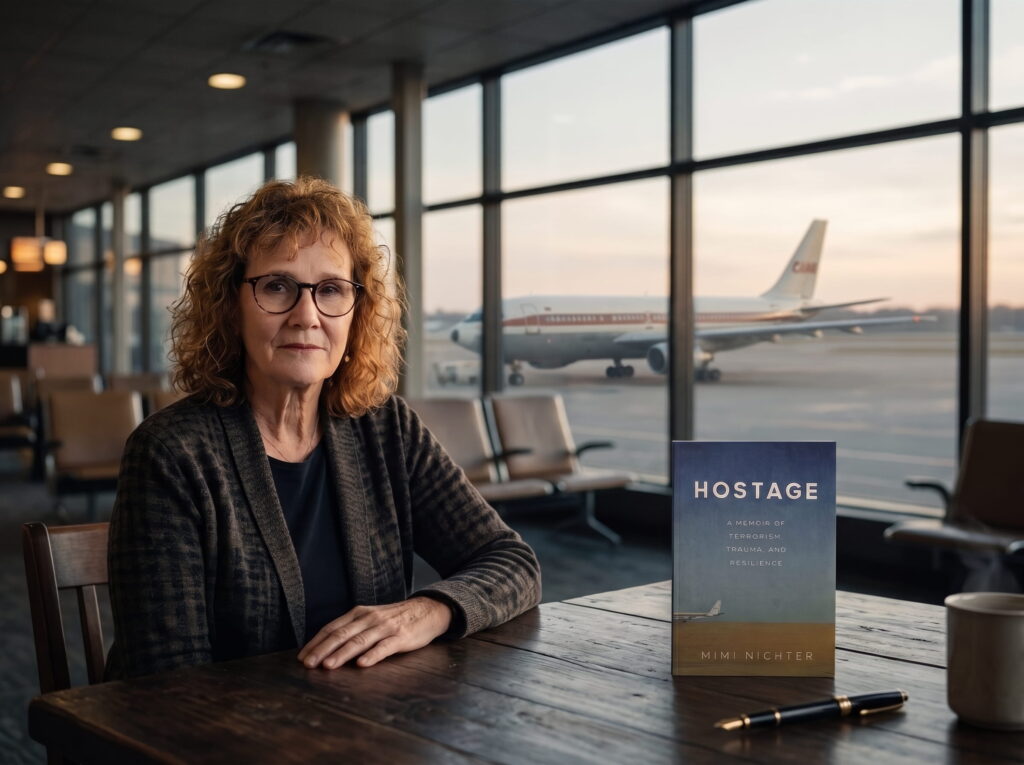
More than fifty years after the hijacking, Nichter wrote Hostage, a memoir of what happened and what followed. Hostage: A Memoir of Terrorism, Trauma, and Resilience follows the long effect of unspoken trauma and the work of healing. It won the 2026 Next Generation Indie Book Award.
She is also a cultural anthropologist and Professor Emerita at the University of Arizona. She appeared with other authors on C-SPAN Book TV.
The 1970 hijacking at a glance
| Fact | Detail |
|---|---|
| Who | PFLP militants |
| When | Sept. 6–9, 1970; crisis ended Sept. 30 |
| Where | Dawson’s Field, near Zarqa, Jordan |
| Hostages | 310 |
| Deaths | One hijacker |
| Response | Nixon program Sept. 11; Hague Convention Dec. 16 |
The takeaway
The 1970 airplane hijacking wave started a response, not a finished system. Within four months, the U.S. announced armed personnel for its flights, and governments signed the Hague treaty. For the view from inside one of those planes, start with the Hostage memoir blog post.